
Disclosure: This post contains affiliate links. If you purchase through these links, we may earn a commission at no additional cost to you.
A small refrigerator can become cluttered surprisingly quickly. Leftovers disappear behind containers, bottles compete for door space, produce gets buried in drawers, and small packages end up scattered across shelves.
Limited refrigerator space makes organization especially important because simply adding more containers does not necessarily create more usable room.
The best refrigerator organizers for small kitchens help improve visibility, separate food into practical zones, and make frequently used items easier to reach. A good system can also reduce the chance of buying food you already have simply because it was hidden at the back of the fridge.
You do not need to fill every shelf with matching containers. In a compact refrigerator, organizers should solve specific problems without restricting airflow or making food harder to access.
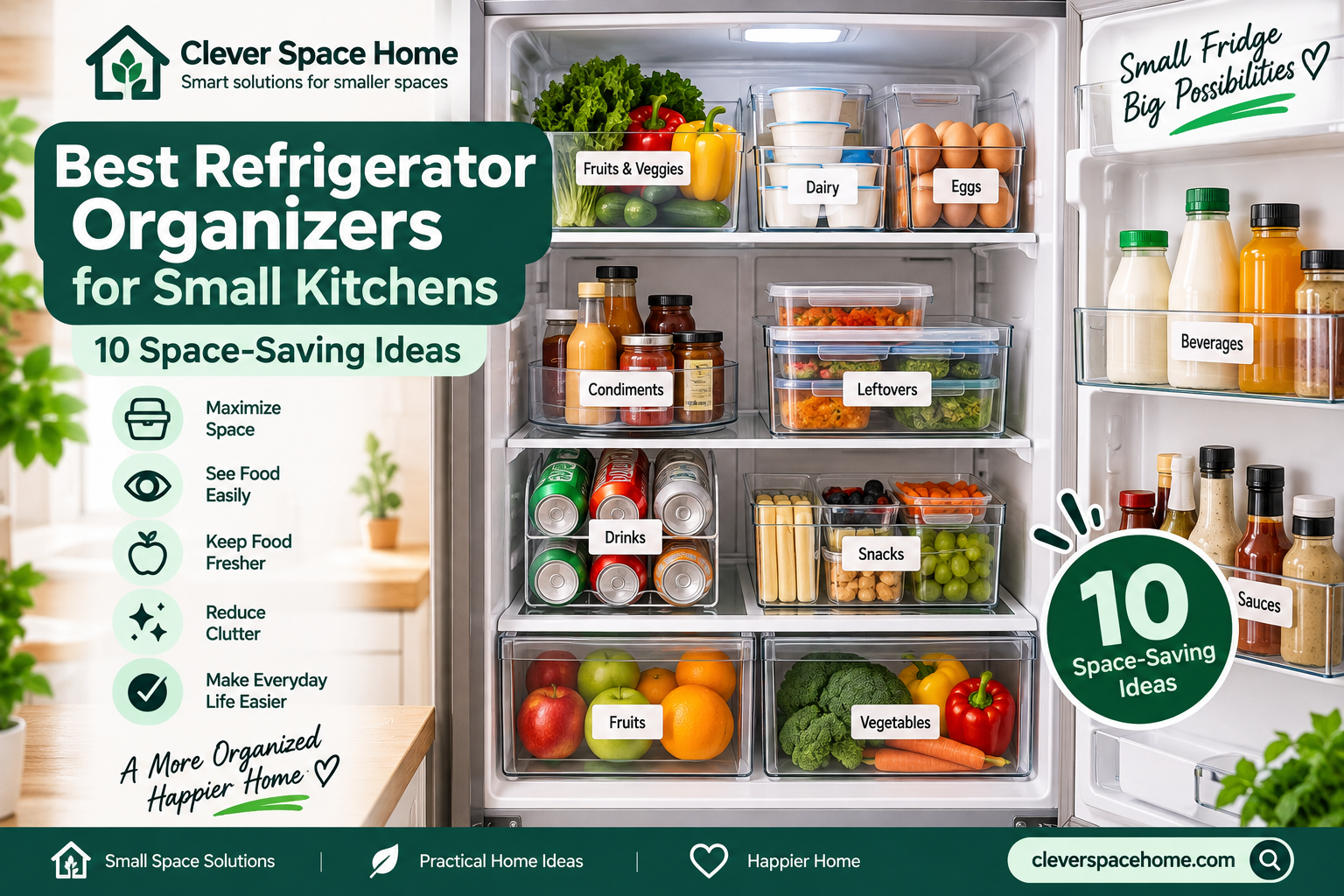
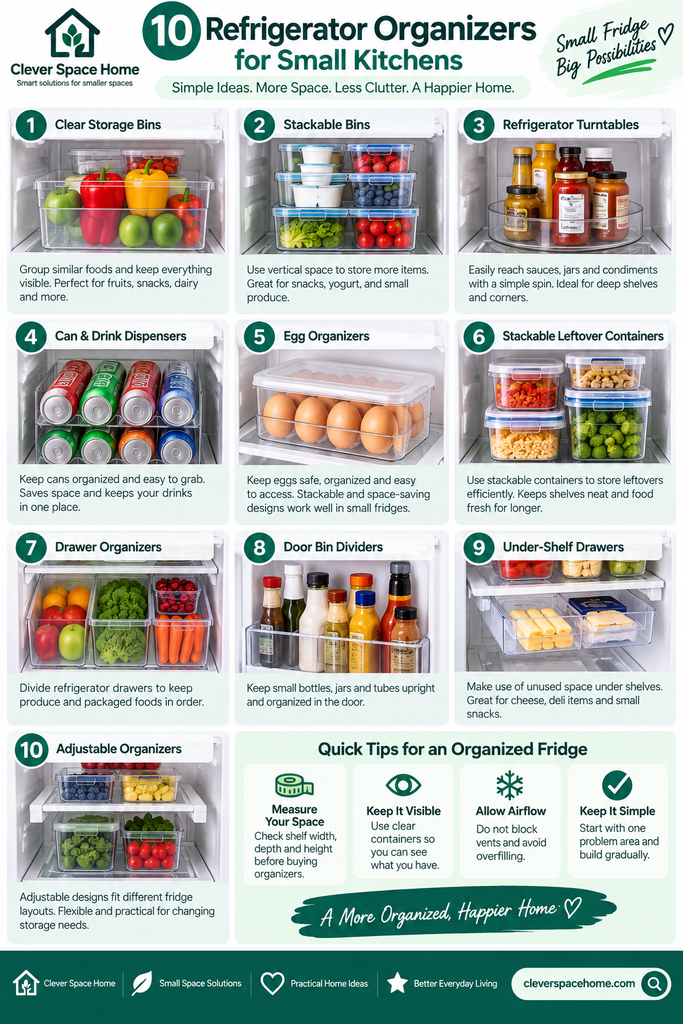
Below are 10 practical refrigerator organizer ideas for making better use of limited fridge space.
Table of Contents
Before Choosing Refrigerator Organizers, Measure Your Fridge
Start by measuring the usable width, depth, and height of the refrigerator shelves and drawers.
Do not rely only on the refrigerator’s overall capacity.
Shelf supports, lights, vents, door bins, and temperature-control components can reduce the amount of usable space.
Also consider the types of food your household normally stores.
If leftovers are your biggest problem, stackable containers and dedicated bins may help. If drinks take up too much space, a can or bottle organizer may be more useful.
Before buying anything, remove expired or unwanted food and clean the refrigerator. You may discover that better food placement solves part of the problem without adding another organizer.
If containers and lids are also creating clutter elsewhere in your kitchen, our guide to the best food storage organizers for small kitchens can help you organize the complete food-storage system.
1. Clear Refrigerator Storage Bins
Clear bins are one of the most flexible refrigerator organizers.
They allow similar foods to be grouped together while keeping the contents visible.
Useful categories might include:
- Breakfast foods
- Snacks
- Lunch supplies
- Yogurt
- Cheese
- Sauces
- Small produce
Bins can be especially useful on deep shelves because the entire category can be pulled forward at once.
Choose containers with handles when possible if you expect to remove them frequently.
Avoid using oversized bins that consume more shelf space than the foods they hold.
2. Stackable Refrigerator Bins
Vertical space between refrigerator shelves is often underused.
Stackable bins can create an additional storage level for smaller foods without requiring permanent changes to the refrigerator.
They may work well for individually packaged snacks, yogurt cups, small produce, or lunch ingredients.
Choose designs that remain easy to access when stacked.
If you need to remove the upper container every time you want something underneath, the system may become inconvenient.
Also avoid stacking bins close to vents or areas where airflow needs to remain unobstructed.
3. Refrigerator Turntables
A small turntable can improve access to jars, sauces, condiments, or other small containers.
Instead of moving several bottles to reach something at the back, rotate the organizer until the item comes forward.
Turntables work particularly well in awkward corners or deep shelf areas.
However, because they are round, they may leave some unused space around their edges.
Use them where improved access matters more than maximizing every square inch.
4. Can and Drink Dispensers
Beverage cans can consume a surprising amount of refrigerator shelf space when arranged individually.
A can dispenser keeps them together and may allow additional cans to roll forward as one is removed.
Some designs also allow limited stacking above them.
Before choosing one, measure the height and depth of your shelf carefully.
A drink organizer should improve access without taking over an entire refrigerator shelf.
If your household rarely stores canned drinks, this organizer probably does not deserve valuable fridge space.
Recommended Product: Automatic Push-Forward Drink Organizer for Fridge
Cans and bottled drinks can take up considerable refrigerator space when they are stored loosely across a shelf. This drink organizer keeps beverages arranged in dedicated rows and uses a push-forward system so the next drink moves toward the front as one is removed.
For a small refrigerator, this type of system can make drinks easier to access while keeping the shelf more orderly. Measure the available shelf depth and height before choosing the installation position, particularly if you regularly store taller bottles or containers nearby.
Check the Automatic Drink Organizer for Fridge on Amazon → (paid link)
5. Egg Organizers
Egg organizers can provide a stable, dedicated location for eggs.
Depending on the design, they may be stackable or use a rolling system that moves eggs forward.
However, organization should not come at the expense of proper food storage.
If you transfer eggs from their original carton, make sure your storage method is appropriate for your refrigerator and household routine.
A dedicated organizer is most useful when eggs are purchased regularly and their original packaging creates a genuine space problem.
Recommended Product: FIFO Rolling Egg Holder for Refrigerator
A dedicated egg organizer can prevent cartons from taking up awkward shelf space while keeping eggs easy to reach. This rolling egg holder uses a FIFO-style dispensing design, allowing eggs to move forward as eggs at the front are removed.
The compact design can be particularly useful in a small refrigerator where shelf space needs to remain flexible. Before buying, check the available refrigerator space and make sure the organizer’s capacity is appropriate for the number of eggs you normally keep.
Check the FIFO Rolling Egg Holder on Amazon → (paid link)
6. Stackable Leftover Containers
Leftovers can quickly turn into a collection of mismatched bowls, plates, and containers.
Using stackable food-storage containers with compatible shapes can make refrigerator shelves easier to manage.
Square and rectangular containers generally use space efficiently because they can sit closely together.
Consider creating one dedicated leftover zone so prepared food does not become scattered throughout the refrigerator.
For more ideas on organizing containers and lids, see our guide to the best food storage organizers for small kitchens.
Labeling leftovers with the storage date can also make it easier to remember what should be used first.
7. Refrigerator Drawer Organizers
Large refrigerator drawers can become difficult to manage when several types of produce or packaged foods are mixed together.
Small bins or dividers can create separate sections inside the drawer.
For example:
- Apples
- Citrus
- Small vegetables
- Packaged snacks
- Cheese
- Lunch ingredients
Dividing a drawer can improve visibility, but do not pack it so tightly that air circulation becomes poor or foods become difficult to remove.
The organizer should create structure, not simply squeeze more items into the drawer.
8. Fridge Door Bin Dividers
Refrigerator doors often contain tall bins that allow small bottles, jars, and tubes to slide around.
Dividers can create smaller sections for items such as:
- Condiments
- Dressings
- Small bottles
- Tubes
- Jars
Keeping similar items together makes it easier to find what you need.
Before using the door for a particular food, follow the refrigerator manufacturer’s storage guidance and appropriate food-safety recommendations because door temperatures can fluctuate more than some interior areas.
Recommended Product: Midnight Suprise Refrigerator Organizer Divider Clips
Wide refrigerator door bins can become cluttered when bottles, jars, and condiments slide into one another. These refrigerator divider clips create separate sections inside an existing door bin, helping different types of items stay grouped without adding another large storage container.
This can be especially useful in a small fridge because the dividers work with storage space that already exists. Check the dimensions and shape of your refrigerator door bins first, since compatibility can vary between refrigerator designs.
Check the Refrigerator Organizer Divider Clips on Amazon → (paid link)
9. Under-Shelf Refrigerator Drawers
Some organizers attach beneath an existing refrigerator shelf to create a shallow drawer.
These can make use of otherwise empty vertical space.
They may work for lightweight items such as cheese, deli products, small snacks, or individually packaged foods.
Measure carefully before buying one.
The organizer should not interfere with food stored beneath it, prevent the refrigerator door from closing, or block vents.
Also check that the shelf can safely support the organizer according to its design.
Recommended Product: Vacane Pull-Out Refrigerator Drawer
Unused space underneath a refrigerator shelf can sometimes be converted into accessible storage with a suspended drawer. This Vacane refrigerator organizer adds a pull-out storage area beneath an existing shelf, providing another place for smaller refrigerated items without taking over the entire shelf below.
A pull-out design can also make items at the back easier to reach. Because refrigerator shelf dimensions vary considerably, measure the shelf and surrounding clearance carefully before purchasing.
Check the Vacane Pull-Out Refrigerator Drawer on Amazon → (paid link)
10. Adjustable Refrigerator Shelf Organizers
Adjustable or expandable organizers can adapt to different refrigerator layouts.
Depending on the design, they may separate bottles, containers, produce, or packaged foods.
Their flexibility can be useful if your grocery habits change from week to week.
An organizer that can be resized or repositioned may be more practical than a highly specialized container with only one purpose.
Before buying, check both its minimum and maximum dimensions.
Recommended Product: OXO Good Grips Adjustable Fridge Shelf Riser
When there is unused vertical space between refrigerator shelves, a shelf riser can create another level for shorter containers and frequently used foods. The OXO Good Grips fridge shelf riser has an adjustable-height design, allowing the storage arrangement to be adapted to the available refrigerator space.
This type of organizer can be useful when stacking items directly on top of one another would make them difficult to access. Use it selectively so that the refrigerator remains easy to rearrange and there is still adequate space around stored foods.
Check the OXO Good Grips Adjustable Fridge Shelf Riser on Amazon → (paid link)
How to Choose the Best Refrigerator Organizers for Small Kitchens
The best refrigerator organizers for small kitchens should improve visibility and access while preserving safe food storage.
Consider these factors before choosing one.
Measure Before Buying
Measure shelf width, depth, and vertical clearance.
Remember that refrigerator interiors are rarely perfect rectangles because of lights, vents, shelf supports, and door components.
Prioritize Visibility
Clear organizers can make it easier to see food before it is forgotten.
If an organizer hides its contents, it may simply create a neater-looking version of the same problem.
Keep Frequently Used Foods Accessible
Foods used every day should be easy to reach.
Avoid placing frequently used items behind large containers or inside complicated storage systems.
Protect Airflow
Do not pack organizers tightly around refrigerator vents.
Cold air needs to circulate through the refrigerator to maintain appropriate temperatures.
Choose Organizers That Are Easy to Clean
Spills happen.
Simple removable organizers are generally easier to wash than complicated systems with many fixed parts.
Create Simple Refrigerator Zones
Zones make it easier to know where food belongs.
Your refrigerator might include areas for:
Breakfast: yogurt, spreads and breakfast ingredients.
Lunch: cheese, prepared foods and lunch supplies.
Leftovers: prepared meals and opened foods.
Produce: fruits and vegetables.
Drinks: bottles and cans.
Condiments: sauces, dressings and jars.
The exact categories should reflect how your household actually eats.
Avoid creating so many categories that the organization system becomes difficult to maintain. For broader food-storage ideas beyond the refrigerator, see our guide to the best pantry organizers for small kitchens.
Keep Older Food Visible
Food hidden at the back of a refrigerator is easier to forget.
When practical, move older foods toward the front and place newer purchases behind them.
This simple habit can help reduce waste and make it easier to use food while it is still suitable.
Clear bins can also help because you can see more of their contents without moving everything.
Do Not Overfill the Refrigerator
A refrigerator that is packed too tightly can become difficult to organize and may interfere with proper air circulation.
Leave enough room for cold air to move around stored food.
If the refrigerator is consistently overcrowded, review what is inside before purchasing more organizers.
Expired condiments, forgotten leftovers, and duplicate items may be using more space than expected.
Keep Refrigerator Temperatures Safe
Organization should support safe food storage.
The U.S. Food and Drug Administration recommends keeping refrigerators at 40°F (4°C) or below.
A refrigerator thermometer can help you monitor the actual temperature.
Avoid leaving perishable foods at room temperature longer than recommended, and follow appropriate storage guidance for leftovers and other refrigerated foods.
Clean Refrigerator Organizers Regularly
Bins and organizers can collect crumbs, spills, and moisture.
Remove them periodically and clean them according to their material and manufacturer’s instructions.
A removable bin is often easier to clean than the entire refrigerator shelf.
Also wipe up spills promptly rather than allowing them to spread beneath containers.
Avoid Buying Organizers Just for Appearance
Rows of identical refrigerator bins can look attractive, but appearance alone does not make a refrigerator easier to use.
Too many containers can actually reduce usable space because each organizer has its own walls and handles.
Start with the problem areas.
If small yogurt cups constantly disappear, one bin may help.
If condiments are already easy to find, they may not need another container.
Function should determine what you add.
For other storage areas around the room, explore our best kitchen organizers for small kitchens.
Build Your Refrigerator Organization System Gradually
You do not need to redesign the entire refrigerator at once.
Start with one problem.
Perhaps leftovers are difficult to see, drinks occupy too much space, or produce becomes mixed together.
Choose one organizer or storage method that addresses that problem.
Use it for a while before deciding whether another change is necessary.
This gradual approach helps prevent buying organizers that eventually become clutter themselves.
Frequently Asked Questions
What are the best refrigerator organizers for a small fridge?
Clear bins, stackable containers, turntables, drawer dividers, and adjustable organizers can all work well. The best choice depends on the foods you regularly store and the dimensions of your refrigerator.
Are refrigerator storage bins worth it?
They can be useful when they group similar foods, improve visibility, or make deep shelves easier to access. They are less useful when they simply add another layer of plastic around items that were already organized.
How do I organize a small refrigerator with lots of food?
Remove expired and unwanted foods first, create simple zones, keep frequently used items accessible, use vertical space carefully, and avoid blocking airflow.
Where should leftovers go in the refrigerator?
Keep leftovers in appropriate covered containers and store them according to food-safety guidance. A dedicated visible zone can help prevent them from being forgotten.
Can refrigerator bins be stacked?
Some refrigerator bins are specifically designed to stack. Check the manufacturer’s instructions and make sure the stack remains stable and does not block vents or interfere with shelves.
How can I make my refrigerator look less cluttered?
Group similar foods together, reduce unnecessary packaging only where appropriate, while retaining any storage, date, safety, or identification information you may need, use a few well-chosen clear organizers, and regularly remove expired or unwanted foods.
Final Thoughts
The best refrigerator organizers for small kitchens make food easier to see, reach, and use without overcrowding the refrigerator.
Clear bins can group similar foods, turntables improve access to small jars and bottles, stackable containers use vertical space, and dividers can create practical zones inside drawers and door bins.
But more organizers are not always better.
Start by cleaning out the refrigerator, measuring the available space, and identifying the area that causes the most frustration.
Then add only the organizers that solve a real problem.
A small refrigerator can work efficiently when food has a logical place, frequently used items remain visible, and enough space is left for safe airflow.
3 thoughts on “Best Refrigerator Organizers for Small Kitchens: 10 Space-Saving Ideas”
Comments are closed.