
Disclosure: This post contains affiliate links. If you purchase through these links, we may earn a commission at no additional cost to you.
Small kitchen cabinets can fill up surprisingly quickly. Plates, cookware, food containers, pantry items, appliances, and everyday supplies all compete for limited storage, and even a reasonably sized cabinet can become difficult to use when items are stacked wherever they happen to fit.
Organizing a small kitchen is not simply about squeezing more products into every available inch. A better approach is to decide what deserves cabinet space, place frequently used items where they are easiest to reach, and use shelves, depth, and vertical space more deliberately.
In this guide, we’ll walk through how to organize kitchen cabinets in a small kitchen step by step, from decluttering and creating practical zones to dealing with deep cabinets, awkward corners, cookware, and useful organizer types.
Table of Contents
Why Small Kitchen Cabinets Feel Full So Quickly
Small kitchen cabinets often feel overcrowded because the available space is not being used in the same way that items are actually used. Frequently used dishes may compete with occasional cookware, duplicate containers take up valuable room, and tall cabinets can leave large areas of vertical space unused above shorter items.
Depth can create another problem. Items placed at the back of a cabinet are easy to forget, while stacking too many things in front of one another makes everyday items harder to reach. The goal is therefore not to fill every empty space, but to make the cabinet easier to see, access, and maintain.
Step 1: Empty, Declutter, and Take Stock
Start by emptying the cabinets you want to organize. Seeing the space without stacks of dishes, cookware, containers, and food makes it easier to understand how much usable storage you actually have and which areas are being wasted.
As you remove items, group similar things together and decide what still deserves space in your kitchen. Look for duplicates, damaged items, containers without matching lids, appliances you rarely use, and anything that would make more sense stored somewhere else. The purpose is not to get rid of useful belongings, but to stop low-priority items from occupying your most valuable cabinet space.
Before putting anything back, take note of each cabinet’s width, depth, shelf height, and any awkward features such as fixed shelves, hinges, pipes, or difficult corners. These details will become important later when deciding where different items should go and whether a storage organizer will actually fit.
Step 2: Map Your Kitchen Into Practical Zones
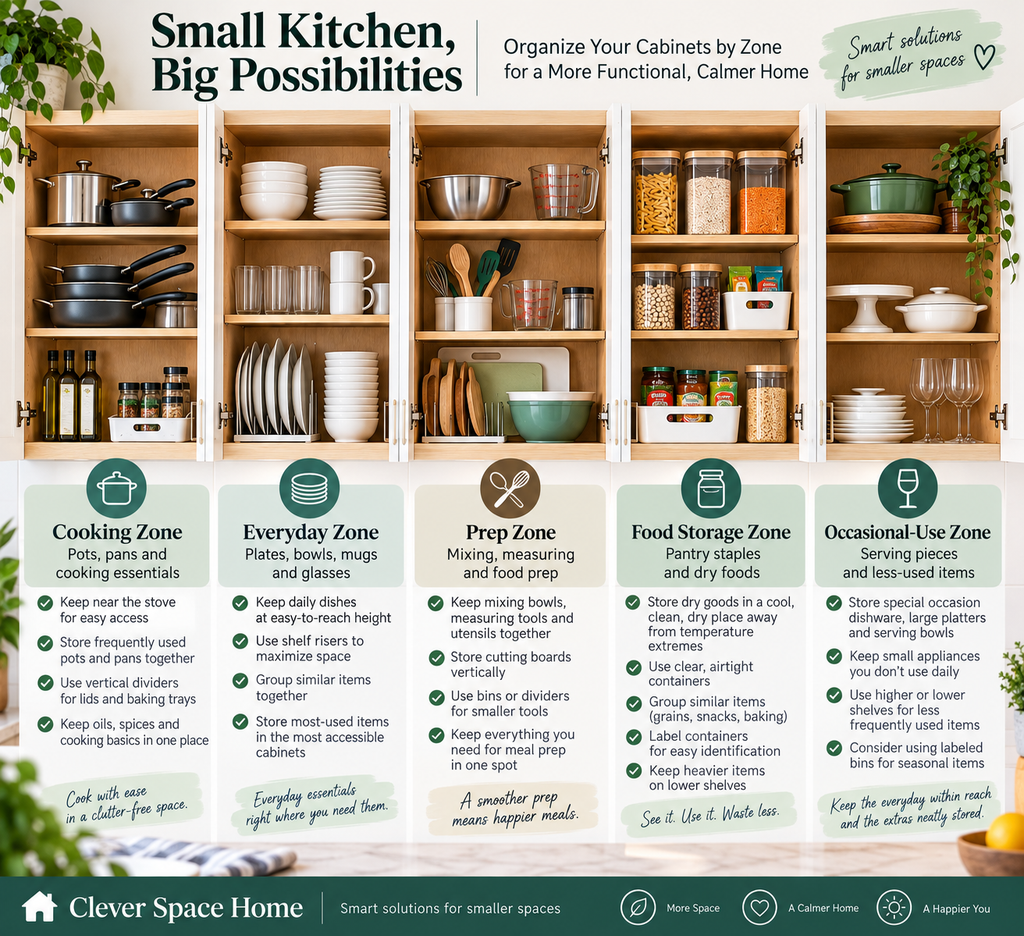
Instead of deciding where each item fits individually, divide your kitchen into a few practical zones based on the activities that happen there. For example, cookware and cooking utensils usually make the most sense near the stove, while everyday dishes and glasses should be stored where they are convenient to use and put away.
A preparation zone might contain mixing bowls, cutting boards, measuring tools, and frequently used food-preparation items. Pantry or food-storage cabinets can hold dry ingredients and packaged foods, while less frequently used serving pieces or seasonal items can occupy harder-to-reach areas. For cabinets used to store shelf-stable foods, choose a cool, clean, dry location away from temperature extremes.
These zones do not need to be perfectly separated, especially in a very small kitchen. The important principle is to reduce unnecessary movement and give related items a predictable home. When cabinet space is limited, prioritize where an item is most useful rather than simply placing it wherever there is an empty shelf.
If the cabinet beneath your sink is part of your storage plan, treat it as a separate zone because plumbing and moisture create different storage limitations. Our guide on how to organize under the kitchen sink explains how to measure around pipes, create storage zones, and choose organizers for that awkward space.
If your kitchen does not have a dedicated pantry, our guide on how to organize a small kitchen without a pantry explains how to create a practical food-storage system using cabinets, vertical space, deep storage, and other available areas.
Step 3: Give the Easiest-to-Reach Space to Everyday Items
Not every shelf has the same value in a small kitchen. The easiest-to-reach cabinet space should generally be reserved for items you use most often, such as everyday plates, bowls, glasses, mugs, or frequently used cooking supplies.
Store heavier items on lower shelves where they are easier and safer to lift, while lighter or less frequently used items can usually go higher. If reaching an item requires moving several other things first, consider whether it belongs in that location at all.
Think about frequency of use as you put items back. Something used several times a day deserves convenient access, while occasional serving pieces, backup supplies, or rarely used equipment can occupy less accessible areas. This simple priority system can make limited cabinet space feel much easier to use without adding any new storage products.
Step 4: Use Vertical Space Before Looking for More Storage
One of the most common sources of wasted cabinet space is unused height. When short items such as plates, mugs, food containers, or pantry goods sit on a tall shelf, a large amount of usable space may remain above them.
Shelf risers can create an additional level without requiring you to stack unrelated items on top of one another. Adjustable shelves can provide the same benefit when the cabinet allows them, while vertical dividers can make items such as cutting boards, trays, and baking sheets easier to store upright instead of in unstable piles.
Before adding an organizer, measure both the available height and the items you plan to store there. The goal is to make unused space functional without creating shelves that are too cramped to access. If adding another level means you have to remove several items every time you need something, the extra capacity may not be worth it.
Step 5: Make Deep Cabinets Easier to Use
Deep cabinets can provide plenty of storage on paper, but they often become frustrating when items at the back disappear behind everything in front. Instead of treating the entire depth as one storage area, organize it so that you can reach the back without unloading the whole shelf.
Removable bins or handled caddies can group similar items and allow you to pull an entire category forward at once. Pull-out organizers can serve a similar purpose when the cabinet dimensions and door clearance allow them. If you prefer not to use an organizer, keep frequently used items toward the front and reserve the back for clearly grouped refills or less frequently used items.
Avoid creating several rows of unrelated products where the items behind the first row cannot be seen. Whatever method you choose, you should be able to identify what is stored at the back and reach it with as little rearranging as possible.
Recommended Product: 2-Pack Pull-Out Cabinet Organizer
Deep cabinets often waste usable space because items stored toward the back become difficult to see and reach. A pull-out organizer can turn that depth into more accessible storage by allowing frequently used items to slide forward instead of requiring you to remove everything in front of them.
This two-pack design also lets you create separate storage zones inside a cabinet. Before choosing a pull-out organizer, measure the cabinet’s interior width, depth, and available clearance so the drawers can slide without interfering with hinges or doors.
Check the Pull-Out Cabinet Organizer on Amazon → (paid link)
Step 6: Organize Pots, Pans, Lids, and Bakeware
Pots, pans, lids, baking sheets, and cutting boards can consume a large amount of cabinet space because their shapes do not always stack efficiently. Deep stacks may appear compact, but they become inconvenient when you regularly need an item from the bottom.
Keep cookware you use most frequently in the easiest-to-reach positions. Nesting compatible pots and pans can save space, but avoid creating stacks so large that several heavy pieces must be removed to reach one item. Lids can often be stored separately in a divider or suitable rack if keeping them on the cookware makes the cabinet difficult to use.
Baking sheets, trays, cutting boards, and similar flat items can often be easier to access when stored vertically with dividers rather than stacked horizontally. Whichever arrangement you choose, make sure items remain stable and can be removed without causing the rest of the cabinet to shift or fall.
Step 7: Use Awkward Corners and Cabinet Doors Carefully
Corner cabinets and cabinet doors can provide useful storage, but only when the solution makes items easier to access. In a corner cabinet, a turntable can help bring smaller items forward, while removable bins may work better when the space is too irregular for a fixed organizer.
The inside of a cabinet door can sometimes hold lightweight items using a suitable door-mounted organizer. Before adding one, check the available clearance carefully. An organizer that fits the door itself may still hit shelves, handles, or items inside the cabinet when the door closes.
Avoid using every available surface simply because storage can be added there. Door-mounted and corner organizers are most useful when they solve a specific accessibility problem without making the cabinet harder to open, close, or maintain.
Recommended Product: Household Essentials Cabinet Door Organizer
The inside of a cabinet door can provide useful storage without taking up another shelf, especially for slimmer kitchen items that otherwise create clutter inside a cabinet. A door-mounted organizer can keep selected items upright and easier to reach while freeing shelf space for bulkier cookware or food-storage items.
Before installing any cabinet-door organizer, check the available door width, interior clearance, and the position of shelves inside the cabinet. The organizer and its contents should not prevent the cabinet door from closing properly.
Check the Household Essentials Cabinet Door Organizer on Amazon → (paid link)
Recommended Product: Bambüsi 3-Tier Corner Shelf Organizer
Cabinet corners can be difficult to use efficiently because items tend to disappear behind one another. A tiered corner shelf makes better use of vertical space while keeping plates, bowls, mugs, or other frequently used items more visible and accessible.
The three-tier corner design is particularly useful when an ordinary rectangular shelf would leave part of the cabinet corner unused. Measure both the available corner footprint and vertical clearance before buying so the organizer fits without restricting access to nearby items.
Check the Bambüsi 3-Tier Corner Shelf Organizer on Amazon → (paid link)
Organizers That Can Actually Help in a Small Kitchen
Storage organizers are most useful when they solve a specific problem rather than simply adding more containers to an already crowded cabinet. Before buying anything, identify whether your main problem is wasted height, difficult-to-reach depth, unstable stacks, awkward corners, or loose items that need grouping.
Shelf Risers
Shelf risers can make use of empty vertical space above shorter items such as plates, bowls, mugs, or pantry goods. They work best when the added level still leaves enough room to see and remove items comfortably.
Pull-Out Organizers
Pull-out organizers can improve access in deep lower cabinets by bringing items at the back forward. Measure the cabinet opening, interior depth, hinges, and door clearance before choosing one, especially if the organizer needs room to slide fully outward.
Turntables
A turntable can make bottles, jars, condiments, or other smaller items easier to reach in deep or awkward areas. Choose one only where it can rotate freely without hitting the cabinet walls, door, or surrounding items.
Vertical Dividers
Vertical dividers can keep baking sheets, trays, cutting boards, pan lids, and similar flat items upright. This can reduce heavy stacking and make it easier to remove one item without disturbing everything else.
Bins and Caddies
Bins and handled caddies can group related items and make deep shelves easier to manage. They are particularly useful when several small items would otherwise become scattered, but avoid oversized bins that hide contents or consume more cabinet space than necessary.
Common Small-Kitchen Cabinet Organization Mistakes
One common mistake is buying organizers before measuring the cabinet and deciding what will actually be stored there. A highly rated shelf, rack, or pull-out system can still waste space if it does not fit the cabinet dimensions, shelf spacing, hinges, or the items you need to organize.
Another mistake is trying to use every available inch. Filling cabinets from front to back and floor to shelf may increase capacity, but it can make everyday items difficult to see and reach. In a small kitchen, convenient access is often more valuable than maximum storage density.
Avoid creating too many complicated categories or transferring everything into matching containers simply for appearance. Containers and labels are useful when they make items easier to identify or group, but adding unnecessary storage products can consume space rather than save it.
Finally, reconsider the system if you constantly have to move several items to reach something you use regularly. Organization should reduce everyday effort. If a cabinet looks tidy but is frustrating to use, the arrangement probably needs to change.
How to Organize Kitchen Cabinets in a Small Kitchen and Keep Them That Way
A cabinet organization system is easier to maintain when every frequently used item has a predictable place. After using something, return it to the same shelf, zone, bin, or divider rather than placing it wherever there happens to be an opening.
Periodically check cabinets for empty packages, duplicate items, unused products, and things that have migrated into the wrong storage area. A short check is usually easier than waiting until the cabinets become overcrowded and reorganizing everything again.
If one cabinet repeatedly becomes messy, look at how you actually use it before buying another organizer. The problem may be that too many items are stored there, frequently used items are difficult to reach, or the original zones no longer match your routine.
Final Thoughts
Learning how to organize kitchen cabinets in a small kitchen is less about fitting in as much as possible and more about making limited storage easier to use. Start by removing what you do not need, create practical zones, prioritize everyday items, and make better use of height and depth where it genuinely improves access.
The best cabinet organization system will depend on your kitchen layout, the items you own, and how you use the space every day. Measure before buying organizers, keep the system simple, and be willing to adjust it when something is not working.
11 thoughts on “How to Organize Kitchen Cabinets in a Small Kitchen”
Comments are closed.